
This guide walks you from creating a template in the Maildeno builder to rendering it in your application.
Prerequisites
-
A Maildeno account (free tier available)
-
Node.js ≥ 18 or Python ≥ 3.9 or PHP ≥ 8.1 — pick whichever fits your stack
Step 1 — Create a template
-
Log in to the Maildeno Dashboard.
-
Navigate to Create Templates.
-
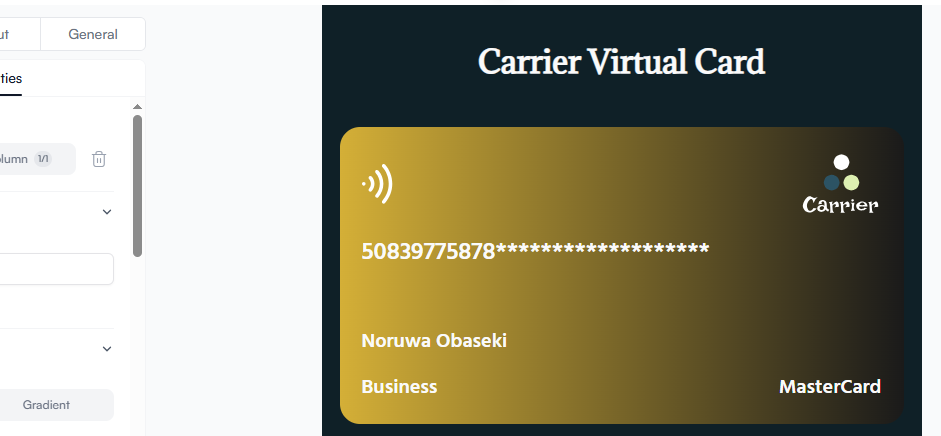
Drag or click layout block onto the canvas.
-
Drag a Heading block and a Text block onto the canvas.
-
In the heading block, type
Hello {{ name }}— this is a merge tag. -
Click Save.
-
Copy the Template ID from the template settings panel (it looks like
550e8400-e29b-41d4-a716-446655440000).
Step 2 — Create an API key
-
Go to Dashboard → API Keys → Create Key.
-
Give it a name (e.g.
quickstart-key) and leave Targets set toAll. -
Copy the generated key — you’ll only see it once.
| Never commit API keys to source control. Use environment variables or a secrets manager. |
Step 3 — Install the SDK
- JavaScript / TypeScript
npm install maildeno- PHP
composer require maildeno/maildeno- Python
pip install maildenoStep 4 — Render your first email
Replace <YOUR_API_KEY> and <YOUR_TEMPLATE_ID> with your actual values.
-
JavaScript / TypeScript
import { MaildenoClient } from "maildeno"

const client = new MaildenoClient({
  apiKey: process.env.MAILDENO_API_KEY!,
})

const html = await client.renderHtml(
  "<YOUR_TEMPLATE_ID>",
  {
    merge_tags: {
      text: { name: "Noruwa" },
    },
  }
)

console.log(html) // <!DOCTYPE html>...
Load your API key from an environment variable — never hard-code it.
The name merge tag fills in the {{ name }} placeholder in your template.
|
-
Python (sync)
import os
from maildeno import MaildenoClient

client = MaildenoClient(api_key=os.environ["MAILDENO_API_KEY"])

html = client.render_html(
    "<YOUR_TEMPLATE_ID>",
    {
        "merge_tags": {
            "text": {"name": "Noruwa"},
        },
    },
)

print(html)  # <!DOCTYPE html>...
Load your API key from an environment variable.
The name merge tag fills in the {{ name }} merge tag.
|
-
Python (async)
import asyncio
import os
from maildeno import AsyncMaildenoClient

async def main():
    async with AsyncMaildenoClient(api_key=os.environ["MAILDENO_API_KEY"]) as client:
        html = await client.render_html(
            "<YOUR_TEMPLATE_ID>",
            {"merge_tags": {"text": {"name": "Noruwa"}}},
        )
        print(html)

asyncio.run(main())-
PHP
use Maildeno\MaildenoClient;

$client = new MaildenoClient([
    'apiKey' => getenv('MAILDENO_API_KEY'),
]);

$html = $client->renderHtml(
    '<YOUR_TEMPLATE_ID>',
    [
        'merge_tags' => [
            'text' => ['name' => 'Noruwa'],
        ],
    ]
);

echo $html; // <!DOCTYPE html>...
Load your API key from an environment variable — never hard-code it.
The name merge tag fills in the {{ name }} placeholder in your template.
|
You should see a complete HTML document printed to stdout. 🎉